2025 Deer Season Numbers
The Minnesota DNR released the final harvest numbers from the 2025 deer season, and for a lot of hunters across the state, the results probably line up with what you saw last fall — it was a good year in many places, but not everywhere.
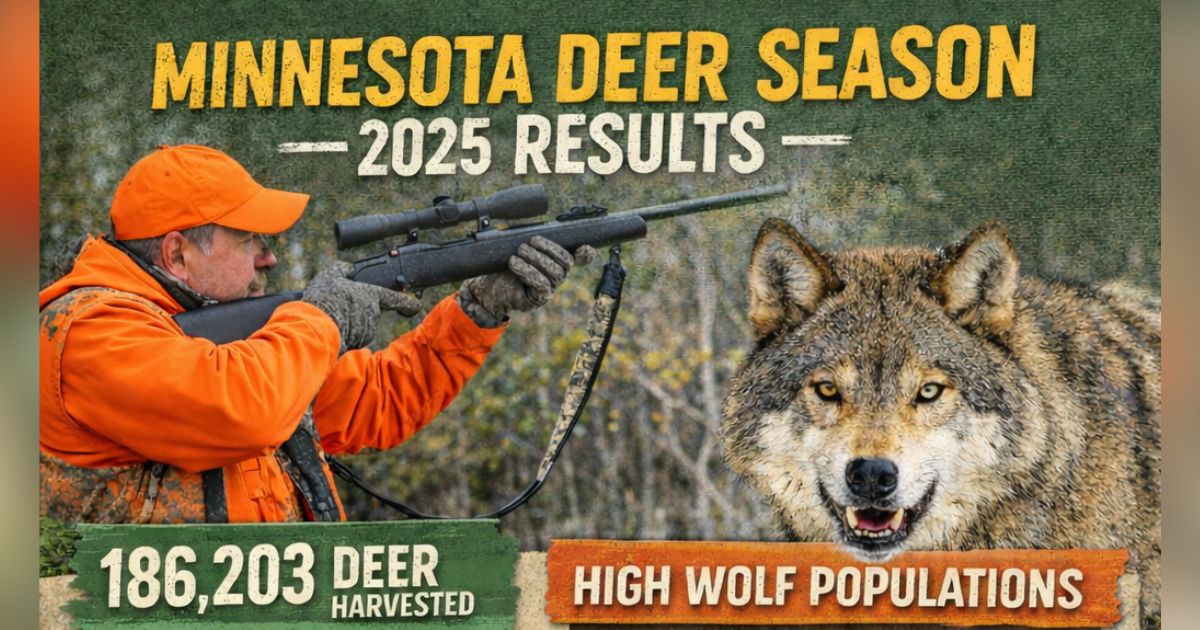
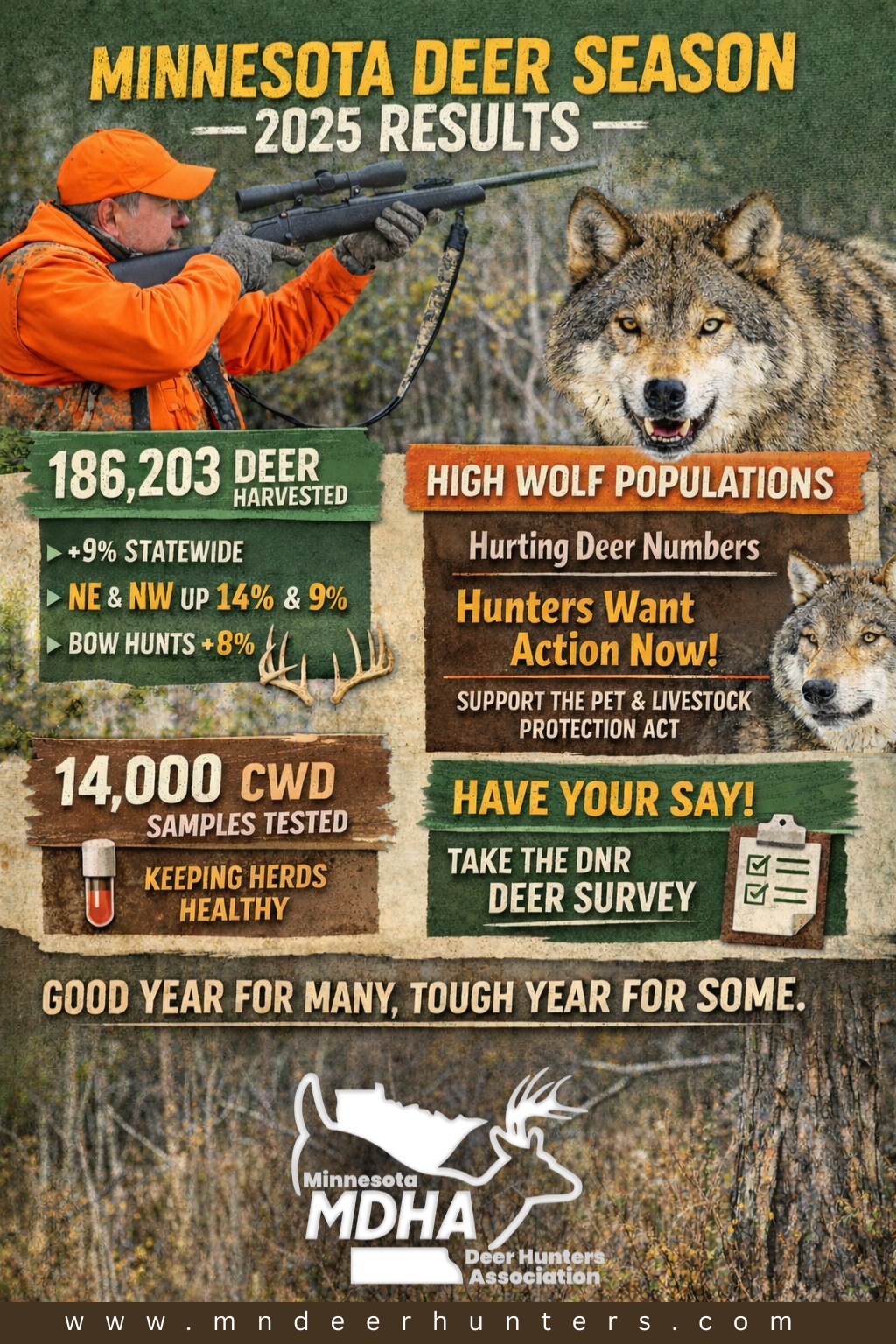
Statewide, hunters harvested 186,203 deer during the 2025 season. That’s roughly a 9% increase over 2024 and slightly above the five-year average. Good weather during key parts of the firearms season and improving deer numbers in several regions helped put more venison in freezers.
But those statewide numbers don’t tell the whole story.
Strong Harvests — But Not Across the Board
Harvest totals were up in most parts of Minnesota:
-
Northeast Minnesota saw the biggest jump, up around 14%
-
Northwest Minnesota increased by about 9%
-
Central and Southeast Minnesota were both up roughly 8%
-
Southwest Minnesota also saw gains, up around 6%
For many hunters, that meant more deer sightings, better rut activity, and more consistent success than in recent years.
At the same time, MDHA is fully aware that there are still parts of the state where deer hunting remains a real struggle. In some areas, hunters are spending long days in the stand without seeing deer, tags are going unfilled, and deer season can start to feel like a lot of time, effort, and expense for very little return.
Wolves, Deer Numbers, and Why It Matters
In many of the areas still struggling, high wolf populations continue to be a major factor. We hear regularly from MDHA members and hunters who say deer numbers simply haven’t rebounded — and in some cases have declined to the point where deer hunting feels "almost like a waste of time".
Hunters living in these areas don’t need charts or reports to tell them something’s wrong — they see it every fall.
That’s why MDHA continues to encourage hunters to speak up in support of the Pet and Livestock Protection Act. This legislation would return wolf management authority to the states, where professional wildlife managers — not federal courtrooms — can make science-based decisions.
Wolves have exceeded federal recovery goals for decades, yet states like Minnesota are still prevented from managing populations responsibly. If you hunt in an area where wolf numbers have changed deer behavior, reduced sightings, or made success feel out of reach, your voice matters. A quick call or email to your U.S. Senator helps remind lawmakers that hunters are paying attention and that balanced wildlife management is critical for the future of deer hunting.
Archery Hunters Saw Gains Too
Bowhunters also contributed to the overall increase. The archery harvest was up about 8% compared to 2024, with crossbows continuing to account for an increasing share of that harvest. Regardless of equipment preferences, it’s clear archery hunters are playing an important role in deer management statewide.
CWD Testing Still Matters
Hunters also stepped up when it came to herd health. Nearly 14,000 CWD samples were submitted during the 2025 season. Most positive detections remain within existing management zones, but at least one positive deer was found outside those areas — a reminder that participation in testing remains critical.
Don’t Skip the DNR Survey
The Minnesota Department of Natural Resources is asking hunters to share their thoughts on the 2025 season through an online survey open until February 23, 2026. Whether your season was great or frustrating, this is one more way hunters can help shape future deer management decisions.
We’re encouraged by the overall harvest numbers — but we’re not ignoring the areas that are still struggling. Strong statewide averages don’t help much if your local deer herd hasn’t recovered or hunting opportunity has disappeared.
Deer hunters are the backbone of conservation in Minnesota. Reporting harvests, submitting CWD samples, filling out surveys, and speaking up for science-based predator management all matter. If we want deer hunting to stay strong — everywhere in the state — hunters need a seat at the table.
How did your 2025 season go? Did the numbers match what you saw where you hunt? Let us know — and don’t forget to make your voice heard where it counts.

Minnesota Deer Hunters Association
460 Peterson Rd
Grand Rapids, Minnesota 55744