Predators, Winter & Fawn Survival: What Minnesota Hunters Should Understand
Late winter is the hardest stretch of the year for Minnesota whitetails. By February and March, deer are living off stored fat. Browse is limited. Deep snow makes every step harder.
And this is when predator impact becomes most noticeable.
Let’s walk through it clearly — using Minnesota data — and keep it grounded in wildlife biology.
Winter in Minnesota Is Measurable
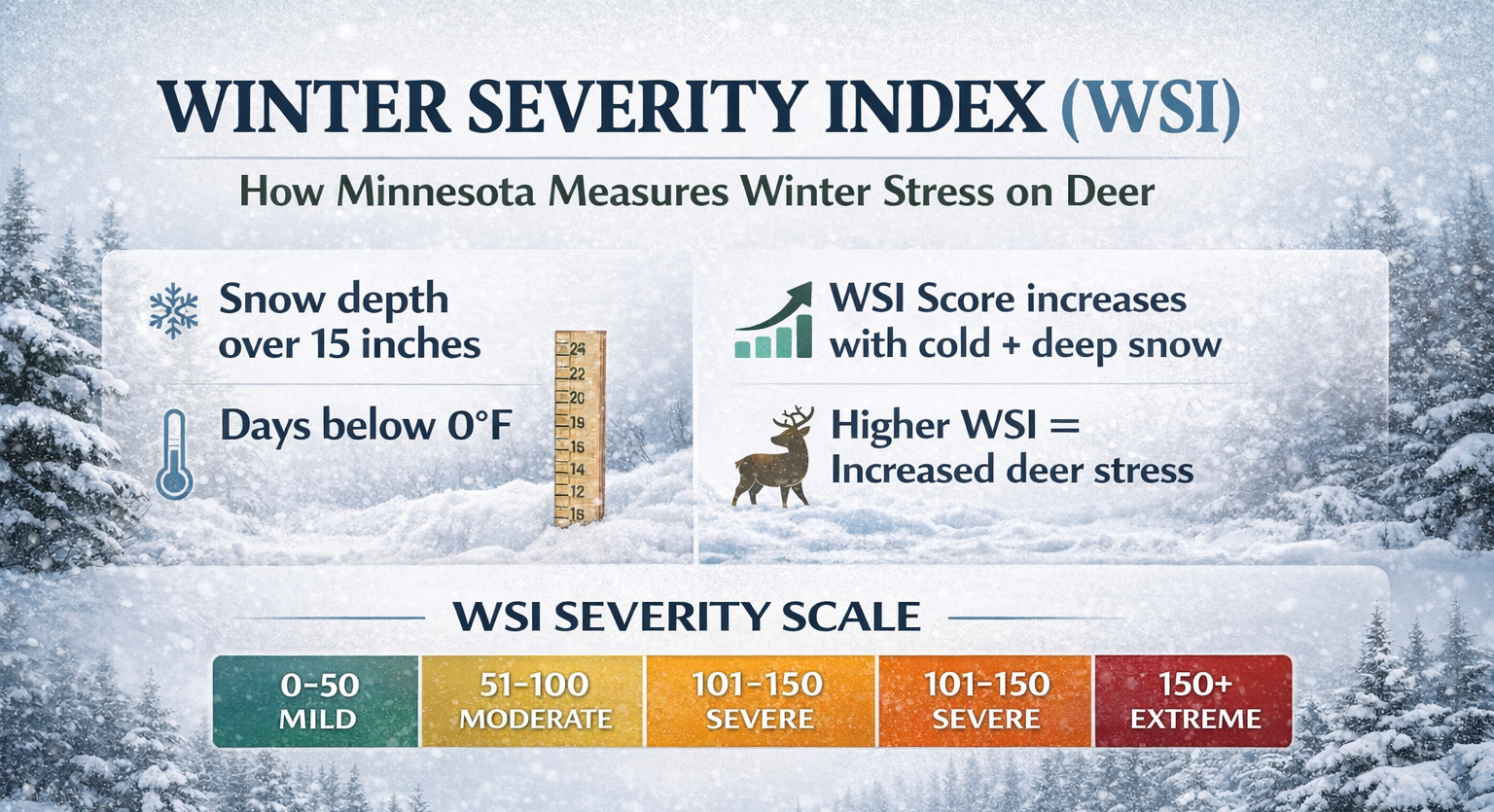
The Minnesota Department of Natural Resources tracks winter conditions using the Winter Severity Index (WSI). The index increases when:
- Snow depth exceeds 15 inches
- Temperatures drop below 0°F
Northern Minnesota frequently experiences moderate to severe WSI ratings. In severe winters, deer expend more energy, move less, and enter spring in poorer condition.
Research from northern Minnesota has shown:
- Fawn survival can drop below 50% following harsh winters
- Recruitment declines in high-severity years
- Recovery is slower in areas with higher predator densities
When winter is mild, deer rebound quickly. When winter stacks up, stress compounds.
Minnesota’s Predator Landscape
Minnesota holds the largest wolf population in the Lower 48 outside Alaska. The DNR estimates approximately 2,700–3,000 wolves, primarily in the northern forest zone.
Primary predators affecting deer include:
- Gray wolves
- Coyotes
- Bobcats
Wolves primarily prey on adult deer during winter, especially when snow limits deer mobility. Coyotes are significant predators of fawns in late spring and early summer, particularly in central and agricultural regions. Bobcats also take fawns and smaller deer when conditions allow.
Studies in Minnesota and the western Great Lakes region have documented:
- Predation accounting for 30–50% of fawn mortality in some northern areas
- Higher predator success during deep snow winters
- Slower deer population recovery following harsh winters combined with high predator numbers
Predators are a natural part of the ecosystem. But when deer are nutritionally stressed, their vulnerability increases.
Regional Differences Matter
Southern Minnesota typically has:
- Strong agricultural food sources
- Shorter snow duration
- Higher reproductive rates
Northern Minnesota typically has:
- Longer winters
- Lower habitat productivity
- Higher wolf densities
That’s why permit areas in the north often see more conservative antlerless quotas. Management reflects biology.
Fawn Recruitment Drives the Herd
Most adult deer survive winter unless conditions are extreme. The key to herd growth is:
How many fawns survive to fall?
When severe winter coincides with high predation pressure, recruitment drops. That affects future harvest opportunity, hunter participation, and long-term herd stability.
How Hunters Can Help Increase Fawn Survival
Hunters aren’t powerless in this equation. Participation in legal predator management is one tool that can help balance local impacts — especially in areas where fawn recruitment is low.
In Minnesota:
- Coyotes may be hunted year-round (with regulations applying)
- Bobcats are managed through a regulated season and quota system
- Predator hunting often increases following harsh winters
Participating in legal, regulated predator harvest can:
- Reduce localized predation pressure during critical fawn-drop periods
- Improve short-term fawn survival in some areas
- Contribute to balanced wildlife management
This is not about eliminating predators. It’s about participating in the system wildlife managers use to balance populations.
Responsible predator hunting:
- Follows all state regulations
- Uses ethical methods
- Works alongside habitat improvement efforts
Habitat remains the most important factor in fawn survival — but predator participation is one of the few direct management tools hunters can use at the local level.
The Bottom Line
In Minnesota:
- Severe winters reduce deer condition
- Predators increase success during deep snow years
- Fawn survival drives long-term herd health
Balanced, science-based wildlife management considers winter severity, habitat capacity, predator densities, and hunter opportunity.
Hunters play a role — through habitat work, participation in regulated predator seasons, and constructive engagement in management decisions.
That’s stewardship grounded in data — and that’s what responsible conservation looks like in Minnesota.
Sources
• Minnesota DNR Winter 2021–22 Wolf Population Survey
• Minnesota DNR Winter Severity Index (WSI) Overview
• Minnesota DNR Farmland Fawn Survival Study (2023 update)
• Nelson et al. – Fawn Mortality Research (SEAFWA Proceedings)
• Journal of Wildlife Management – Fawn Survival Research
Minnesota DNR Fawn Survival Data: According to an ongoing Minnesota DNR fawn study in the south-central farmland region, researchers collared more than 150 fawns in 2021–22. Of 157 collared fawns, 69 died within their first year and 51 of those were killed by coyotes, indicating a substantial predator impact on fawn survival in that region.
Broader Research Context: Research from multiple North American studies shows that predation often accounts for a significant proportion of fawn mortality. In some documented cases, predation was responsible for roughly half of all fawn deaths, with coyotes as the primary predator. Survival rates vary widely based on habitat, predator densities, and environmental conditions.

Minnesota Deer Hunters Association
460 Peterson Rd
Grand Rapids, Minnesota 55744