Making the most of muzzleloader season – strategies for capitalizing on late season hunting
I distinctly remember the weather that day. It was a lackluster December day, slightly overcast, with temps at least five degrees above normal. Sure, there was snow on the ground, but nothing about the conditions gave me butterflies about my odds of killing a good buck. If anything, I was hoping to see a few does, as I didn’t have any good bucks left on camera. I talk all the time about poor attitudes being hunt killers, but I’m not always great at practicing what I preach.
My dad asked if I wanted to hunt the stand up on the ridgetop with the food plots laid out parallel along the ridge top and down below, but I told him to take it, as I had a few cameras I wanted to check (back in the “old days” of SD cards) down towards a lower bottom.
I was perched plenty early overlooking a food plot split between corn and beans, simply hoping for a doe. I had been whiling away the time on my phone when I about jumped out of my skin when I heard my dad’s muzzleloader bark well before dark only a few hundred yards from me. It was easily an hour before the end of shooting light.
Assuming he must have shot a doe given the early time of day, I thought he was messing with me when he texted saying he’d shot a big buck. I called him immediately to set the record straight, and there was no mistaking his rattled voice, he was definitely telling the truth.
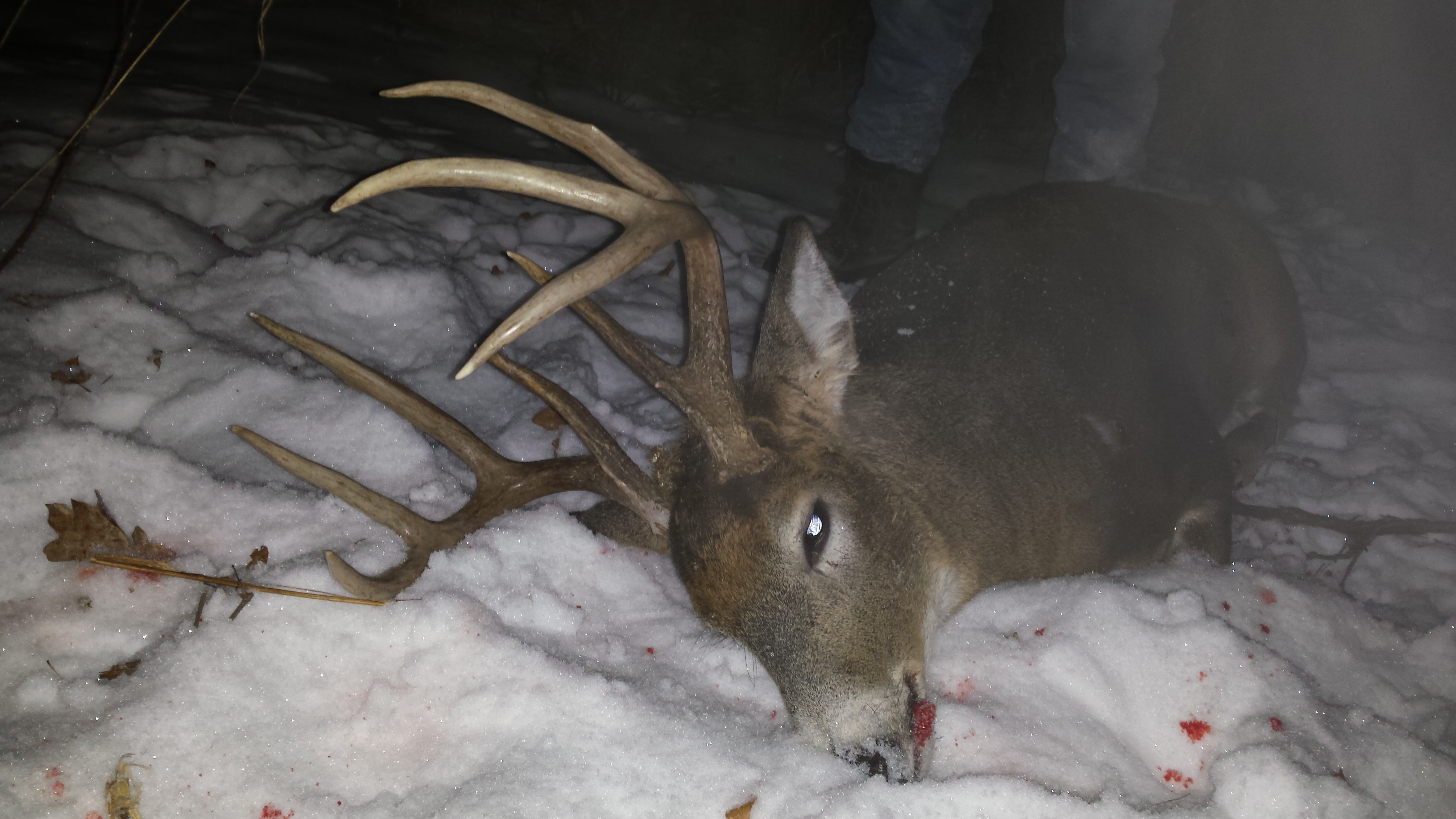
Walking up on the buck an hour after dark, I was floored. This buck was a towering 8-point with seven-inch brow tines that we had never seen on our property but knew of from folks in the area. His primary home range was at least a couple miles away, and yet here he was, on a day that a big buck had no business sticking his nose out before dark.
Ever since then, I’ve readjusted much of my attitude towards hunting in December. It seems like we can no longer bank on cold weather and deep snow by the time muzzleloader season rolls around. Couple that with some healthy doe fawns possibly coming into estrous, and the calculus changes substantially. Conventional wisdom around deer hunting this time of year will tell you a few things: You need to be focused on food, cold, snow, and evenings. The end. But whitetails don’t always follow that script.
Expect the Unexpected
The early part of December can be a strange time in the whitetail woods. The weather is usually vastly different than it was a month before, winter is seriously settling in, and the deer herd has undergone a major shakeup after the firearms deer season.
Couple this with highly limited food sources relative to earlier in the fall and the foreboding winter months ahead, and whitetails can start behaving in ways we never would have guessed. Mother Nature has shaped whitetails to have an extremely strong drive to feed this time of year in order to pack on as much fat as possible prior to the deep freeze of January. Not to mention, in early December there always seem to be a few bucks that can’t shake the lust for romance.
Over the years, these factors have led to a new mature buck showing up on my cameras nearly every single year. I typically have no idea where they came from, and it often seems like they are gone the following year, but during a couple week stretch in December, there they are.
Though conventional wisdom would suggest that hunting on warm days is poor strategy right now, I’m no longer convinced. If you control huge acreages with minimally pressured deer, sure, pick your days better. But on small acreages in high-pressure areas, I’m still putting my time in, though hunting smart in the process. Had my dad listened to conventional wisdom that early December day, he’d have one less shoulder mount on the wall to show for it.
In other words, if muzzleloader season is your last hurrah, you don’t have the luxury of waiting for a blizzard or a massive cold front to kick deer into action. It’s not easy when conditions play against you, but if one deer hunting truism applies anywhere in whitetail country, it’s that you aren’t going to kill one sitting on the couch. This is when getting creative with your hunting strategy can pull the rabbit out of the hat and result in a buck on the ground.
Know the Food
For the entire rest of the deer season, food is king. The number of calories a deer consumes daily right now might literally be a life and death matter by March. This is where trail cameras and minimally invasive scouting can come in handy. Knowing exactly what the deer are feeding on is generally going to be the difference between a deerless sit and punching a tag.
I like to run trail cameras on all the food plots that still contain food, and if I get a free midday, I’ll walk the fringes of the food source to confirm deer use. When viewing the trail cam pictures, note where the daylight activity is heaviest, and note the general direction deer seem to be approaching from. Go online and look up which way the wind was blowing those days where deer were feeding early to help you craft your ideal access route and stand location to be hunting on a given day.
Hunt the mornings
I’m not a morning person, and I have a half dozen people I could call on a whim to back me up on that. The only time I’m adamant about hunting mornings is during the month of November, and even then, I struggle to rise when the alarm goes off. I especially despise hunting mornings in the late season.
There’s no two ways around it – deer are still on edge from gun season, they aren’t staying out as late in the morning anymore, and it’s maybe the hardest time of the season to set up for morning hunts. This seems especially true under normal or below-average temperatures.
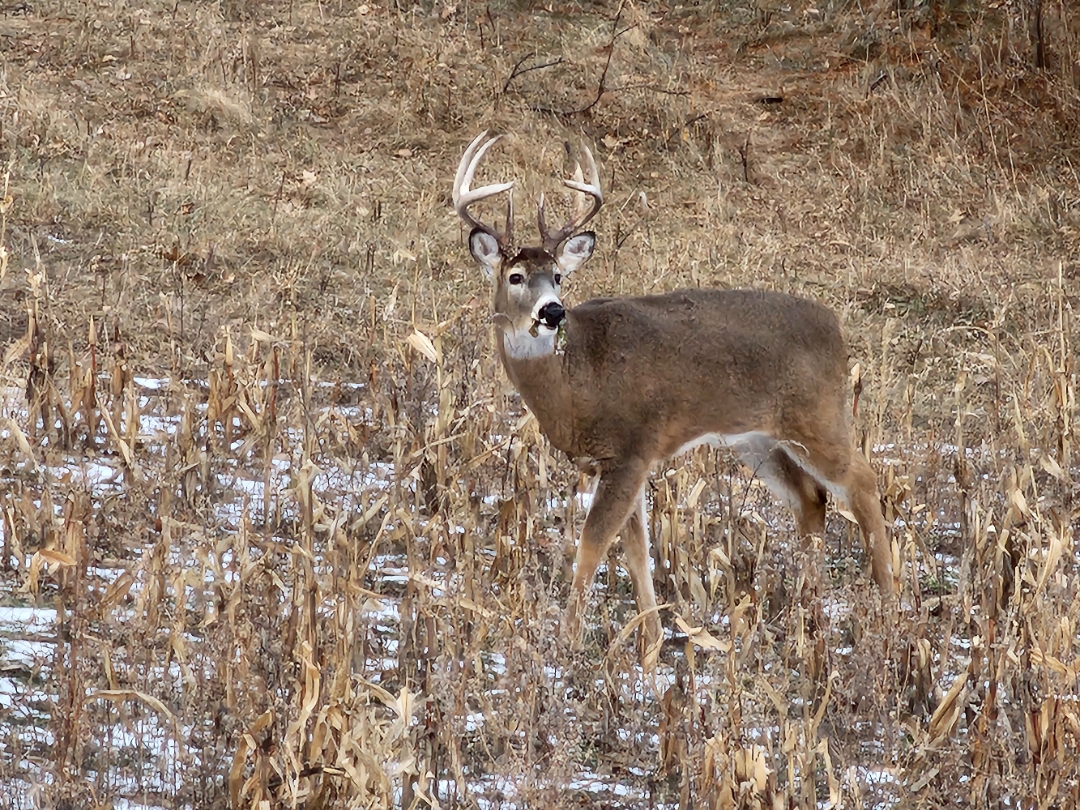
But if we get a December heat wave, it can make deer act strangely. In some cases, it’s almost like they revert to late October movements. Remember, by now deer are in full winter garb, meaning any daytime high over roughly 40°F gets uncomfortable in a hurry if deer are on the move. I think this is a large part of why evening movement can be spotty at best during warm spells late in the year. However, mornings still tend to be cool, and sometimes deer will dawdle when it comes to getting back to bed.
Couple that with any does or doe fawns coming into estrous, and mornings can still be good. All it takes is a single female on the verge of heat and you can still have a parade of bucks strolling by in the early parts of December.
This is a situation when setting up on oak flats halfway between bedding and food sources can make for dynamite action. Sometimes, getting tighter to bedding can be even better. I don’t like getting crazy close to bedding areas at this point, but if your access is right, there’s nothing wrong with spending a couple mornings in close if you can get out undetected.
Hunt the oaks
We’ve had a few bumper acorn crops in the last decade, and my trail cams have really proven to me what a difference that can make in deer movement throughout the season. This year, everywhere I’ve been has proven to be another bumper acorn crop, which means oaks are still a major factor. In fact, right now, I’m prioritizing my stands that sit fairly deep in cover provided they’re located in an area with an abundance of oak trees.
At least in my area, there are still gobs of acorns on the ground, and deer are going to continue hammering these until they’re gone. On a year like this, when I hear hunters say they’re not seeing any deer on food plots before dark, I’m banking on those deer being back in cover munching away on acorns.
In these situations, being tight to bedding isn’t vital. The biggest thing is being in an area with abundant acorns and solid access, so deer aren’t busting you on the way in. When acorns are abundant, it’s amazing how long deer will mill around in timber before making a move to food plots or ag fields. When a quality food source like that is sitting around in cover, deer are going to take full advantage for as long as they can.
Mind the does
Keeping in mind that the rut follows a bell curve shape, with estrous does making up the data points along the curve, we’re now on that far right tail of the bell curve. That means there are very few does that have yet to cycle into estrus, and mature bucks know it.
Apart from late-cycling adult does, there are some doe fawns that were born early enough to reach the weight threshold to trigger estrus in their first year, and mature bucks are definitely cued into this. Though it’s nowhere near the mid-November chaos, there’s still enough love in the air to account for it in hunting strategy at this point.
This is where knowing the bedding locations of your local doe and fawn groups can pay major dividends. You don’t necessarily need to set up right on top of them, but being on the downwind edge of their bedding areas can be enough to make your season when Mr. Big decides to scent check for late-estrous does.
Listen to what the deer are telling you. They have no motive other than surviving winter right now and maybe sneaking in one more breeding opportunity, so if you see deer doing something that makes them vulnerable to harvest, take advantage of it.
Final thoughts
Muzzleloader season isn’t for the faint of heart. Many deer have already been harvested, and it’s a given that a lot of mature bucks are no longer around. It can force you to think outside the box and utilize strategies you would never consider the rest of the year. If the clock is ticking on your deer season, get creative and utilize some of these tactics to put you in position to capitalize on atypical deer movement.
By thinking outside the box, you can separate yourself from other hunters and put yourself in a position to capitalize on hunting pressure. At the same time, you can utilize that same pressure to hopefully set up for the buck of a lifetime.

Minnesota Deer Hunters Association
460 Peterson Rd
Grand Rapids, Minnesota 55744