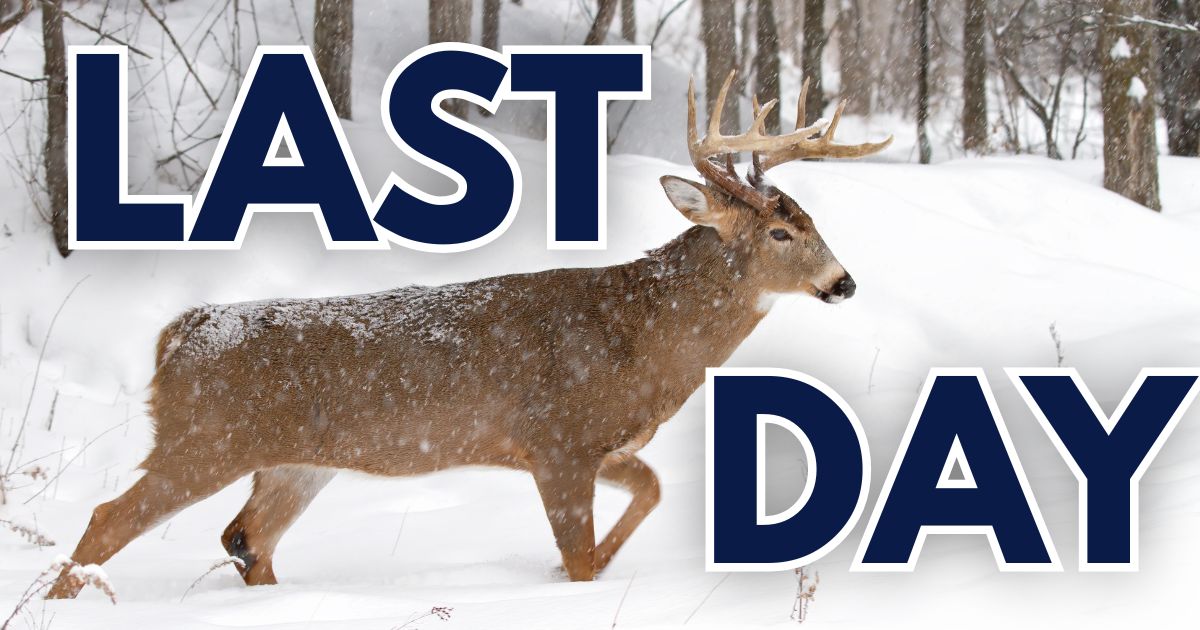
The last day of deer season has a certain temperature about it. Robust laughter bursting across a card table of happy flannel-clad hunters with their bucks hanging outside on a meatpole creates a warm feeling. By contrast, standing alone in a barren, snowy woods, clinging to the slim hope that your buck will appear in the waning seconds of the season creates a cold, lonely feeling.
I have felt both.
Whether I’ve killed a buck or not, it’s almost inevitable that I’ll be in the woods for one final sit on the last day. Although I or someone nearby probably still has a tag, I really have no intention of shooting a deer. In fact, the last deer I killed on the final day of the season was in 1992. Nope, it’s more about just being out there and seeing the season off.
Being in the woods as the clock winds down is a time for reflection. If I were successful, I usually wander down to where my buck came to rest on the forest floor. I like to see the progress the wolves, coyotes, ravens, crows, eagles and woodpeckers have made on the gut pile. Sometimes it’s still there – a frozen last remnant of what just days earlier had been the very lifeblood of a magnificent creature. Other times, it’s completely devoured overnight.
That’s the happy sort of reflection. Sometimes I kneel down next to tracks in the snow and imagine “what if?” If only I’d have let him take a few more steps. Or if only I hadn’t made that untimely noise. Then those snowy tracks would have led to a gut pile. On rare occasions there are old, frozen drops of blood on the ground alongside a well-trod human trail. Eventually the blood becomes less frequent, and finally, the human tracks simply turn back. Those are the worst reflections, and I’m thankful that they are rare.
That final sit is a lonely one. Gone are the opening day throngs of hunters with their war-like gunfire. Gone, too, are many of the deer, and those that remain are secretive, being most active after the last hunter has left the woods for the day. Even the drivers who give it one last hurrah have quit the woods by early afternoon of the final day. They’ve got a camp to pack up and a long drive home ahead of them. No, those final few hours are quiet. And lonely.
For the record, I have never actually seen a buck on the last day of season. In my early years of hunting, when most hunters shot the first buck they saw, it seemed a miracle that a buck could survive the opening weekend barrage. And I’ll never forget when one of the members of our party killed a 3.5-inch spike on the 8th day of our 9-day Wisconsin gun season when I was a teenager. At the time it seemed to me like the kind of thing that should have made the local newspaper because it just didn’t happen. Nowadays, with hunters often passing up young bucks, far more survive to shed their antlers. Even so, I’ve still never seen one on that final sit, and I’ve often wondered what I’d do if I saw one. Would I shoot it and be happy to have filled my tag like a football team kicking a winning field goal as time expired? Or would I give the buck a pass, figuring if he had made it this far, his chances of surviving and growing a bigger rack the following year were pretty good? I’m not sure. Someday I’ll have to answer that question in a hurry.
Perhaps my favorite part of that final vigil is thinking back to all the hunts I’ve had over the years. I like to think back and remember each year, what – if anything – I killed that year, where it was and who I was with. It was a happy moment the first time I realized I didn’t have enough fingers anymore to tally my deer as I recalled the years. Bucks, does and even a few fawns have made my list, and although some deer stand out more than others, they’re all important and they all have a story. I fondly recall my first buck and my biggest buck of course, but then there’s the buck fawn I killed at Grandma’s place the year before she sold off her land. It was the only deer I ever killed there, but at least I can say I shot a deer on the land my grandparents farmed and where my dad grew up.

Then there are the friends and relatives who I’ve hunted with over the years. Some are gone now, some have moved on to different hunting camps and some have simply drifted away, but there are still faithful companions to rekindle memories with and new hunters to create more memories.
The settings are important, too. There was the old box blind in the cornfield where my dad sat for many year, and where I sat for a few seasons even before I could legally hunt. There are favorite trees that are reliable producers. There are also bittersweet memories, like grandma’s old farmstead or the beautiful oak woods where I sat several seasons before it was slicked off.
As the clock ticks down, I think back to the things I’ve seen on stand: the young buck with the baler twine in his antlers, the buck breeding a doe, a piebald doe, foxes, a wolf, eagles, woodpeckers and more animals than I can recall. How many chickadees have landed on my gun barrel? And if you added up all the points from all the bucks I’ve ever killed and divided it all out, how many points does my average buck carry?
It’s a lot to contemplate. No wonder I never see a buck on the last day.