
- Tom Claycomb
- From Whitetales
- Hits: 383
Why Not Make Your Own Sausage?
- Tom Claycomb
- From Whitetales
- Hits: 383
I love deer hunting. I love the preparation. I love the hunt. I love the camp. But, why let it end there? If you drop your deer off at the processor, then your hunt is truly over. In a future issue I will write an article on cutting up your deer, but for now, suffice it to say making your own sausage will extend your hunting experience. Not only that, you will save money and enjoy good eating for the rest of the year!
Long-Time Sausage Makers
To be an official “long-time sausage maker” means your family has been making sausage for generations, something like at least 3-4 generations and maybe even in the Old Country before they moved to America. You might even have some old family recipes that have been passed down for generations.
To reach this level of expertise obviously is a lifelong quest. So, for this article we’re going to short-circuit the system. Your old German sausage-making granddad might turn over in his grave, but don’t worry, you can get to his level later.
Cold Smoking and Cure
Real sausage makers will do a cold smoke, somewhere around 87-92 degrees. The smoke will flavor the meat and the low heat will dry it out, but that is the perfect temperature for incubating bacteria which is why you must add the cure (sodium nitrites).
At the sound of using nitrites some people might panic, but realize (I’m quoting from a VPP Class (food safety) at Texas A&M 44 yrs. ago by memory), if you ate 750 lbs. of bacon per day for 20 yrs. only one out of every 20 women born since WWII would get cancer.
The nitrites not only cure the product, they add flavor. The curing properties is what allows you to carry it in your backpack all day without it spoiling.
Old vs Modern Sausage Making
Everyone always asks me, “Don’t you think they used to make better sausage 100 yrs. ago than they do now?” I answer, “Nope, no way.” Think about it. In the old days all you smoked with was what wood you had in your locale. In Minnesota, probably hickory, apple, maple, or cherry. In Alaska and Oregon, alder, and in Texas, mesquite, and so forth. The only spices you had were local spices. Where do you think the name “bologna” came from? Frankfurters? Polish sausage? German sausage? (answers: bologna, Italy; frankfurter, Germany, Poland, and Germany). They used what they had locally.
Now? I can find almost anything at a local store and if not, I can order nearly any spice or flavor of wood to smoke with in the world off the Internet. So, don’t feel like since you’re a modern-day novice that you’re a second-class sausage-maker.
Getting Started
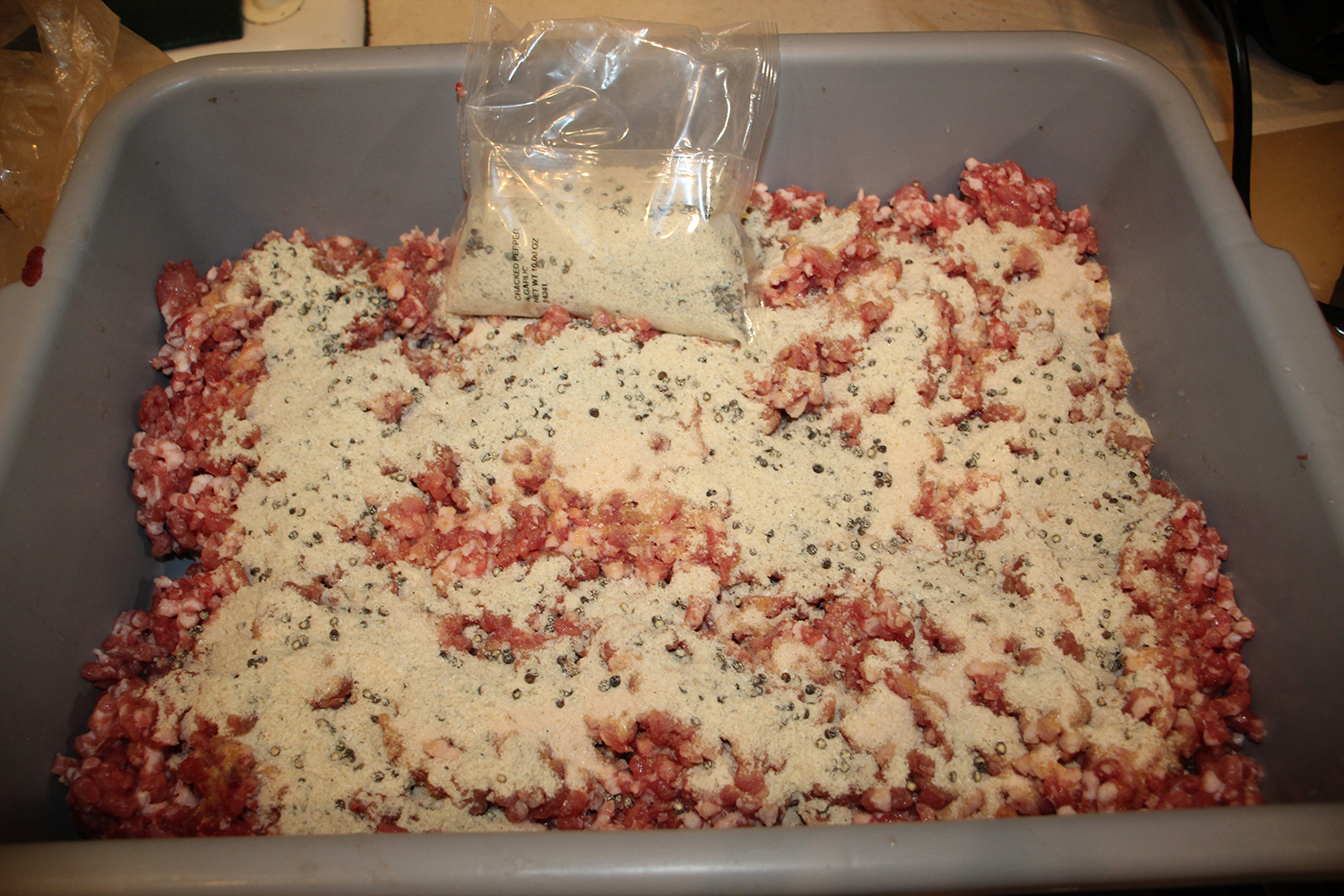
So then, lest you get intimidated to even try to make your own sausage, let’s go the simple route at first. Use a store-bought mix. Eventually, however, you’ll want to experiment and come up with your own blends, but for now, buy a pre-made blend. But don‘t go the cheap route or you’ll be sorry. It’s going to cost nearly $1.00/lb. for good spices and casings. The best blends I’ve found are made by “Hi Mountain Seasoning” out of Wyoming. Right now, I’m favoring their “Cracked Pepper & Garlic Summer Sausage,” but they have a big selection from which to choose.
Choosing the Meat
So, how do we get started? You can make sausage out of any or your big game and some people even make sausage out of game birds/waterfowl. For this article, however, let’s focus on big game. You’ll want to add pork fat to your sausage for flavor and juiciness. If I’m hunting in Texas, I’ll use a wild hog for my pork. Years ago, when we were making sausage on the ranch in Sonora we’d run down to Del Rio and pick up pork fat to mix with our sausage. Now, I buy a fat pork roast which is about 60/40 (60% lean and 40% fat). That way I get the fat, plus some good hog meat in the blend.
Lean Percentage
We could argue forever on the lean percentage, but I’d recommend making your sausage around 75% lean, 70% is too fat and will resemble cheap store sausage. Some might argue 85-90% is healthier. Okay, let’s be honest. We aren’t eating sausage to be healthy. Plus, remember when McDonald’s came out with the “McLean Hamburger”? It was 91% lean. Where’s it at now? Gone. Americans, whether they admit it or not, like the taste of fat. The “McLean,” or “McFlopper,” as it became known, was a disaster. It tasted like bat guano. To have some flavor, you must have a little fat. Anything 80% and leaner is classified as extra lean by USDA regs and starts losing its taste (and is not as juicy).
Processing the Deer
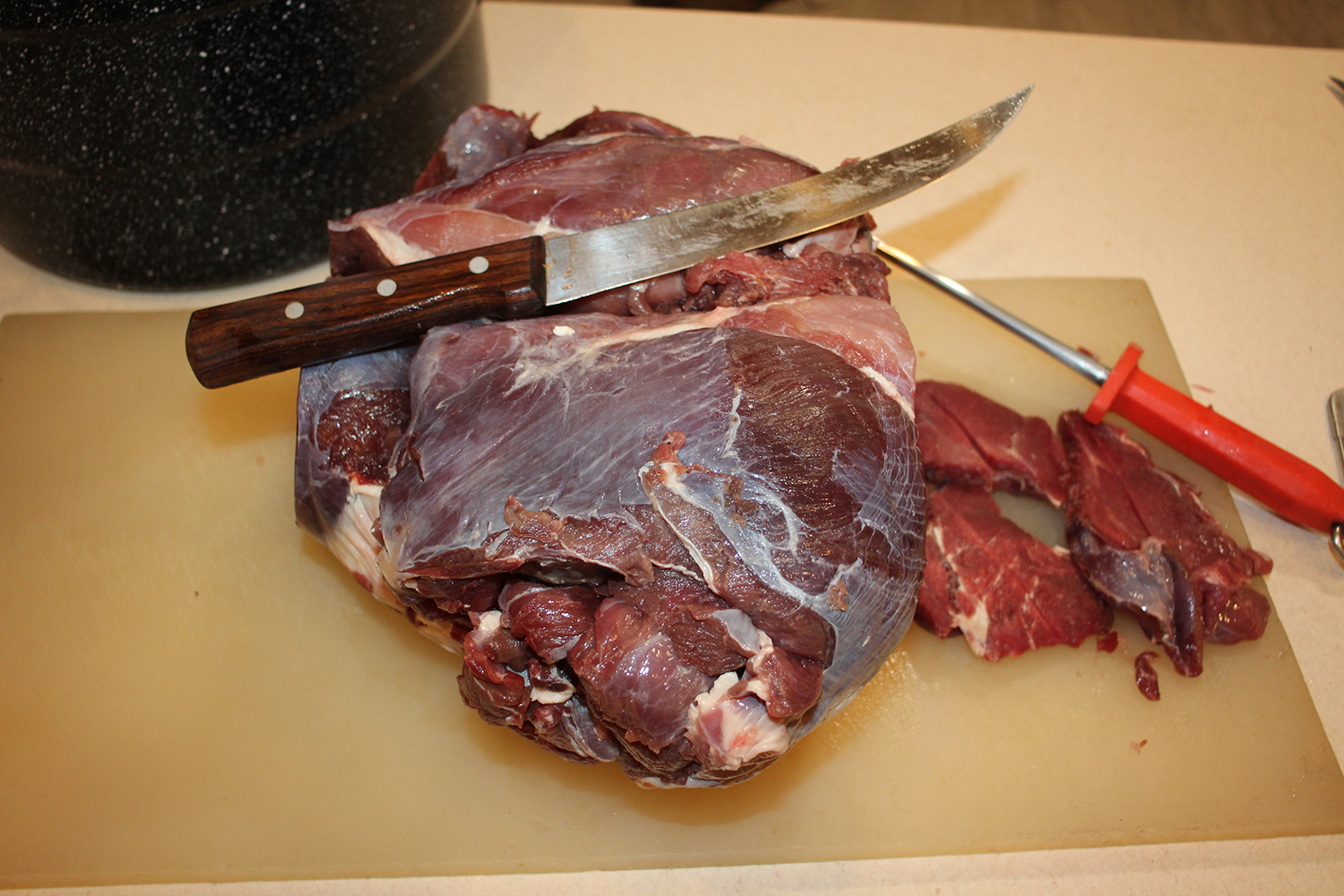
I would imagine that you’re going to save a few cuts off your deer and grind the rest for sausage. I save the backstraps, tenderloins, and if I want to make some jerky, I’ll save the round flats and/or knuckles. I love to smoke the shoulders (I’ll teach you how to do that in another article). I also like to keep the top round for chicken fried steaks, but everything else goes into the sausage bucket. Therefore, you’ll need to decide how many cuts you want to save.
Everyone cautions you to trim off all the wild game fat, maintaining it will give it an off odor. Maybe so, but don’t get crazy removing every spec of fat and tissue or you’ll only end up with a handful of meat. Chill out. Do you not think that all of it is left in the beef jerky, every hamburger, and steak that you buy?
The shanks are super lean, but since there are a lot of tendons and sinew in them, I don’t recommend putting them in your sausage. Make “osso buco” (a classic Italian dish) out of the shanks.
Grinding and Mixing
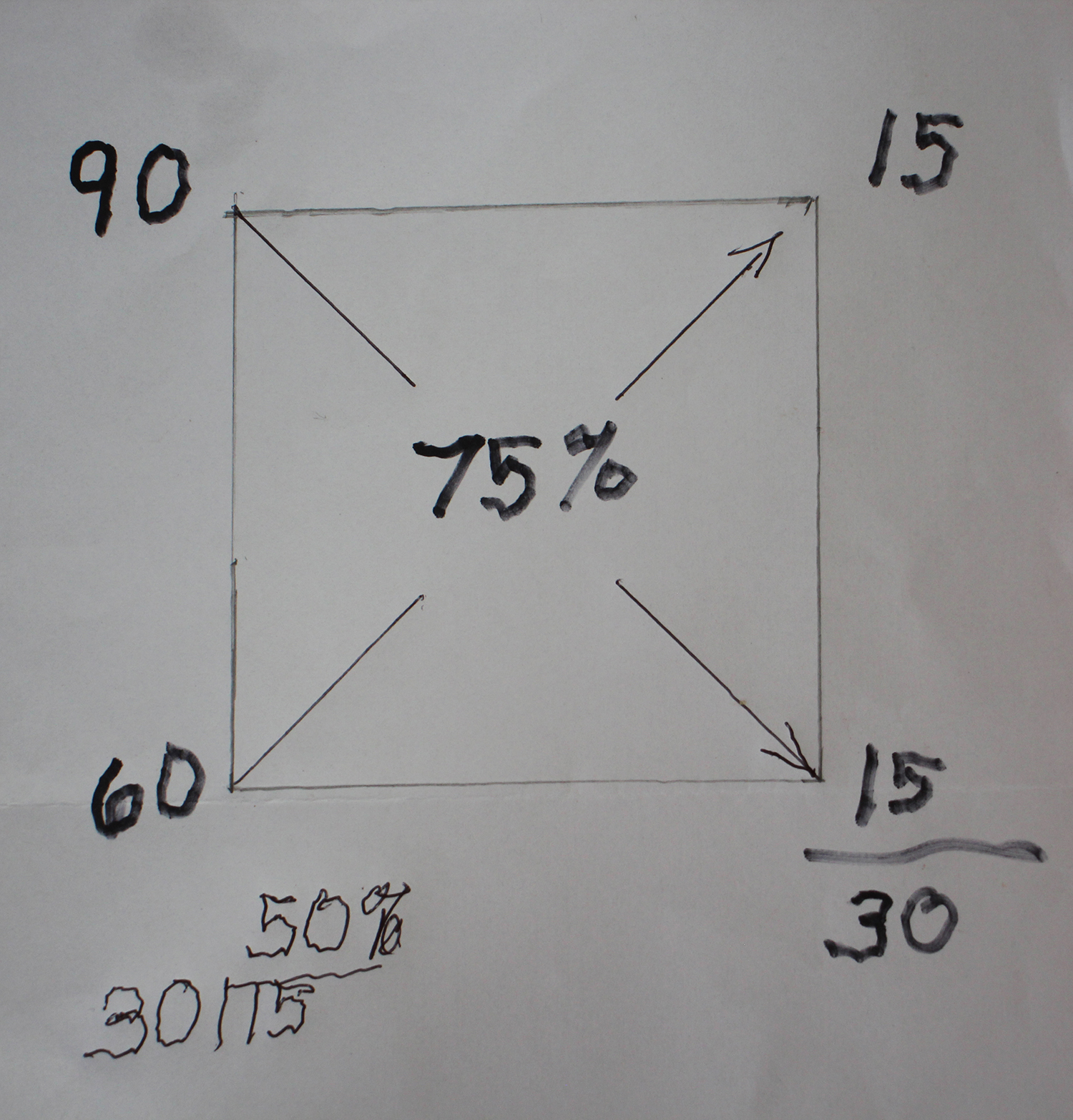
When the trim is compiled off your deer, it is probably around 90% lean. Use the old sausage-maker’s square to determine how much pork or pork fat to add. See chart. Mix so you will have a 75% lean finished product.
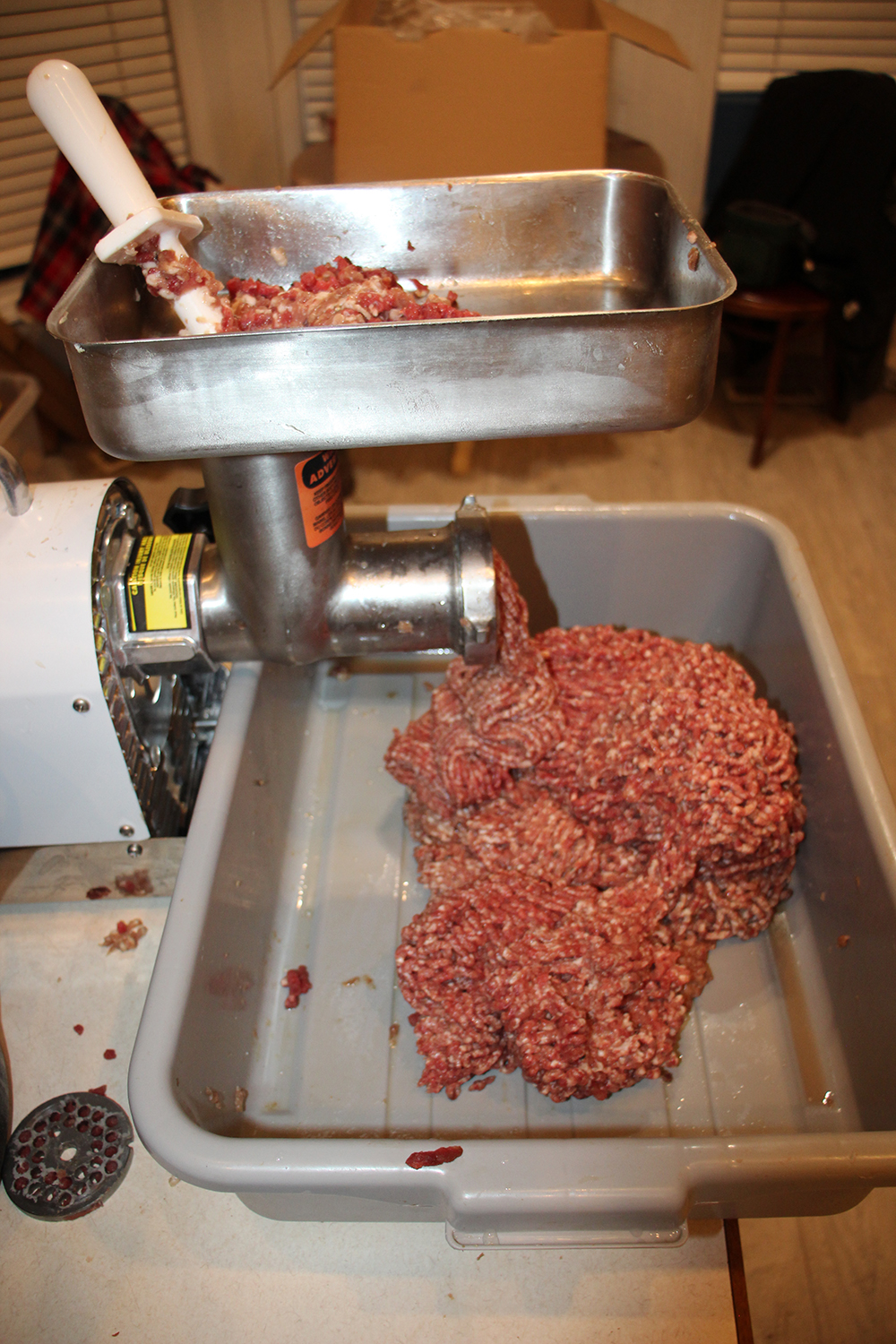
Here’s how I do it. I coarse-grind my pork and then coarse-grind my deer. I then sprinkle the spices into the ground pork and mix them in. Next, I thoroughly mix the pork and deer meat together and grind again to 1/8-inch. Meat grinds better if it is semi-crystallized (semi-frozen).
Make sure you mix in the spices well and that you also get a good mix on the deer and pork so the spices and pork are evenly distributed.
Casings
Now you have two choices, make bulk sausage packages or stuff it into casings. Some like to bulk package and then thaw it out and make breakfast patties. There are natural casings which are pork or sheep intestines that come packed in salt so you need to soak them in warm water to soften and then put the end on your faucet and flush out all the salt or it will ruin your sausage.
They also make collagen casings. I like these because they have a larger diameter, and you can blow and go when stuffing, but I don’t think the smoke permeates them as well as it does on natural casings. Before you start stuffing, though, make a small patty and fry it up. Does it need more garlic? Salt? Sage? Remember, it’s add now or forever hold your peace. Once it’s stuffed, it is too late.
Equipment
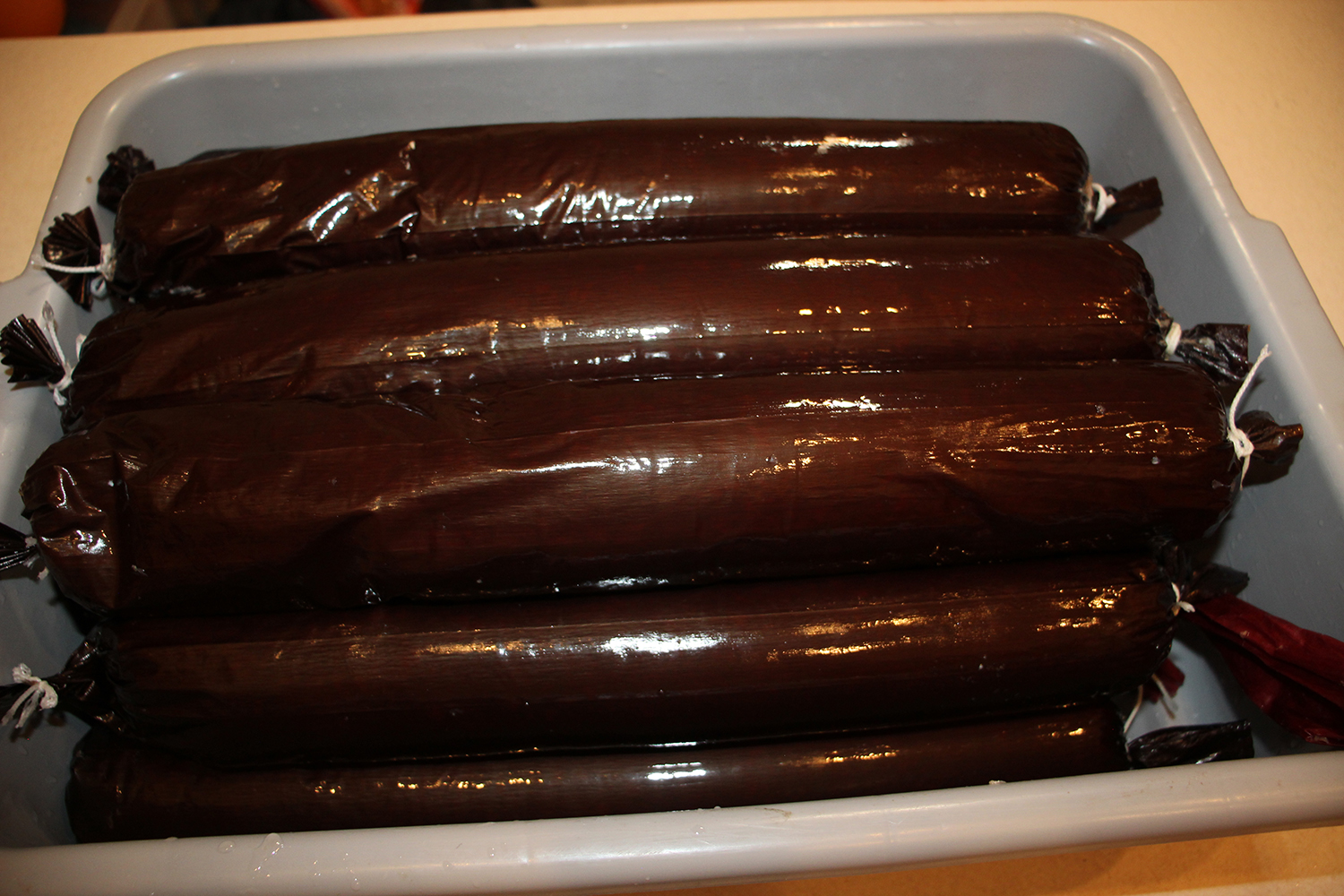
You can use a hand grinder to grind and stuff, but it’s a major pain. Buy a decent grinder with a larger motor and you’ll never regret it. Years ago, I got a Weston Grinder and stuffer and love them. Before I’d always put a stuffing attachment on my grinder, but I finally got a stuffer and love it. It is ten times easier and faster.
Smoking
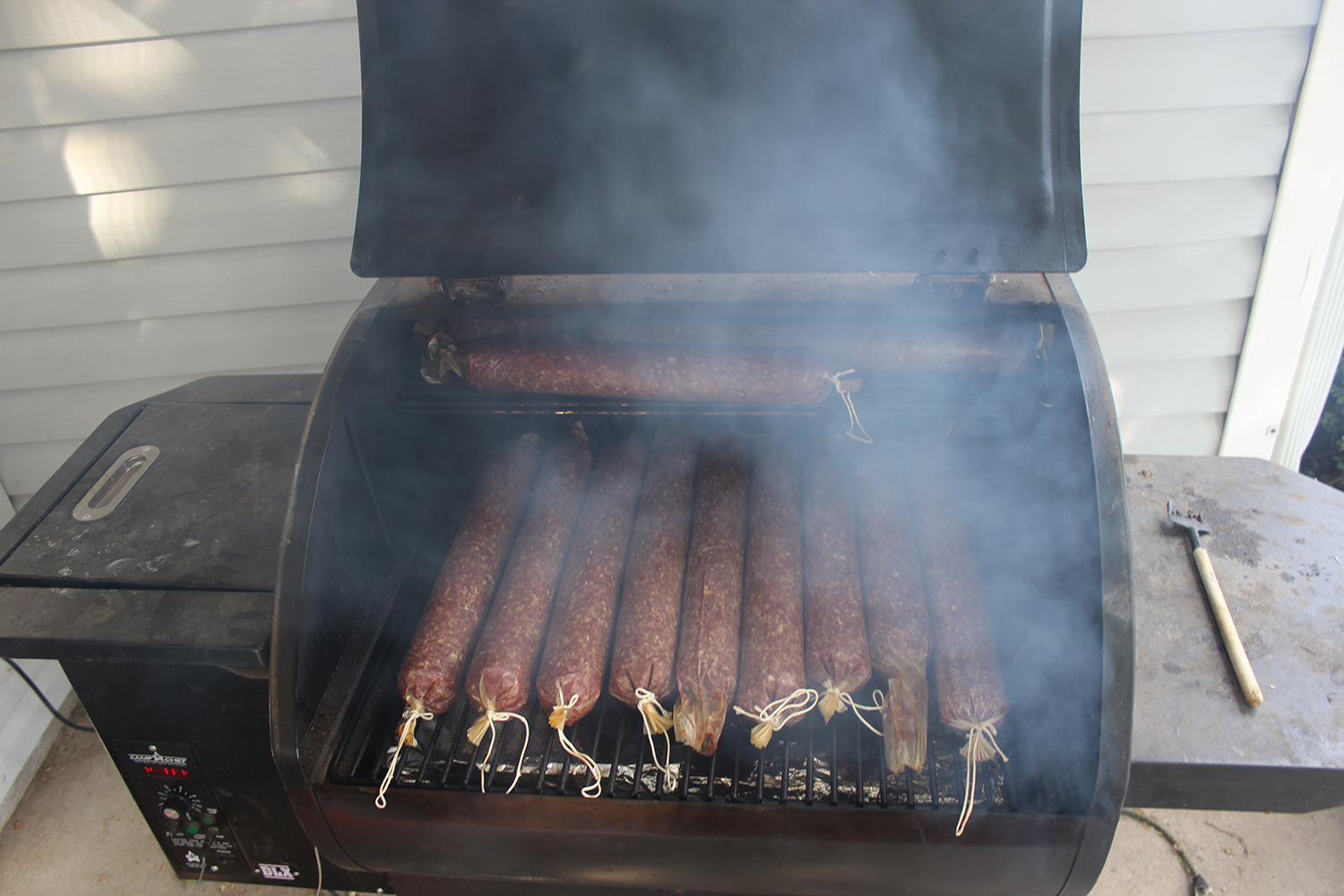
Now for the smoking. Some people like to let it set overnight and season better before smoking. If you’re in a hurry, no biggee, but it won’t hurt to let it set for at least a couple of hours. You have two choices, a cold smoke, or a hot smoke. To cold smoke you’re depending on the nitrites to cure the meat. The old country/old school jerky-makers cold smoked their sausage.
Years ago in Haines, Alaska, I remember hanging around with an old Indigenous brown bear guide. In a 10x10-foot wood smoke shed he had racks of salmon hanging and a small fire built on the ground in the center. The alder wood fire gave the fish a smoked flavor and the wood fire slowly dried out the fish over the course of 2-3 days. In the old days around Ketchikan, they even put fillets on brush to dry them out in the sun (if it was not raining-which is not very often).
Cooking Temperatures
In case you’re paranoid about smoking at low temps and don’t trust sodium nitrates to kill the pathogens and want to cook to full temp, refer to the USDA Appendix A Chart on p. 35 https://www.fsis.usda.gov/sites/default/files/media_file/2021-12/Appendix-A.pdf To kill pathogens, it designates an internal temp of 158 as immediate kill. As you will see, it has descending temps for longer temp hold times. If the center temp is 145 for 4-minutes or 140 for 12-minutes, then it has the same effect as 158. Make sense?
Also realize if you go to a 165 internal temp, the outside is probably 185 and will be dried out. According to external weather temps, also realize if the internal temp is 145 and the external temp of the link is 170, as it cools down it will probably equilibrate out to 157.5, which means it has been over 140 for a good while.
Freezing
Yes, you can freeze the tubes raw, but I like to have them cooked so I can pull them out and start eating them immediately. On the other hand, it is fun to be able to pull out a link and throw it on the grill as an appetizer before you start cooking the steaks if you’re having a party.
Make sure, however, to wrap your links in freezer paper because the casing isn’t enough to keep them from freezer burning.
Final Thoughts
So, as we end, don’t be afraid to make your own sausage, even in a worst-case scenario, you’re not launching a nuclear missile!